Difference Between Jgf 27 Inch 4K Monitor and Asus Rp Ax58 Explained
The modern computing landscape is often defined by the peripherals and networking hardware that support our primary devices. Whether you are using a high-end workstation or a portable ultrabook, the ecosystem of hardware you build around your computer determines your productivity, entertainment quality, and overall efficiency. However, in the world of consumer electronics, product names can sometimes lead to confusion, especially when comparing items that belong to entirely different hardware categories. This is the case when looking at the Jgf 27 Inch 4K Monitor and the Asus Rp Ax58.
On the surface, these two products might seem like they could be compared as part of a high-end office setup, but they serve fundamental, non-overlapping roles. One is a visual output device designed to deliver millions of pixels to your eyes, while the other is a networking solution designed to ensure those pixels (and other data) travel wirelessly through your home without interruption. Understanding the distinction between a high-resolution display and a dual-band Wi-Fi 6 range extender is critical for any consumer looking to upgrade their "Laptops" category setup, as both devices are frequently sought after by laptop users who want to expand their mobile workstation into a more robust home office environment.
In this comprehensive analysis, we will dive deep into the technical specifications, real-world utility, and specialized features of both the Jgf 27 Inch 4K Monitor and the Asus Rp Ax58. By the end of this guide, you will understand not just what these devices are, but how they contribute to a laptop-centric workflow in vastly different ways.
The Jgf 27 Inch 4K Monitor: A Deep Dive into Visual Fidelity
The Jgf 27 Inch 4K Monitor represents the current "sweet spot" for professional and creative displays. For laptop users, a secondary monitor is often the first major upgrade purchased. While a laptop screen is convenient for travel, the limited screen real estate can hinder multitasking. A 27-inch panel provides enough physical space to have multiple windows open side-by-side, which is essential for coding, video editing, or complex spreadsheet management.
The core of the Jgf monitor is its 4K UHD resolution, which translates to 3840 x 2160 pixels. On a 27-inch screen, this creates a high pixel density (pixels per inch, or PPI), leading to incredibly sharp text and vivid imagery. For designers and photographers, this means being able to see fine details without constant zooming. For the average office worker, it means smoother fonts that reduce eye strain during long working hours. Most Jgf panels in this class utilize IPS (In-Plane Switching) technology, which is prized for its color accuracy and wide viewing angles. This is particularly important if you use your laptop in a multi-screen setup where the monitor might be slightly off-center from your direct line of sight.
Connectivity is another area where the Jgf monitor shines for laptop users. Modern 4K monitors often include HDMI 2.0 or 2.1 ports and DisplayPort 1.4. Many premium models also include USB-C connectivity with Power Delivery. This allows a laptop user to connect their computer to the monitor with a single cable that transmits the video signal while simultaneously charging the laptop, effectively turning the monitor into a docking station.
Pros and Cons of the Jgf 27 Inch 4K Monitor
- Pros: High pixel density ensures crisp text and detailed imagery, making it ideal for creative professionals.
- Pros: 27-inch size is large enough for productivity but small enough to fit on standard home office desks.
- Pros: IPS panel technology offers superior color reproduction and 178-degree viewing angles.
- Pros: Often includes modern port selections that facilitate easy "one-cable" setups with modern laptops.
- Cons: 4K resolution requires a relatively powerful laptop GPU to drive smoothly, especially for gaming or video work.
- Cons: High resolution on a 27-inch screen usually requires Windows or macOS scaling (e.g., 150%), which some legacy apps might not handle perfectly.
- Cons: Higher power consumption compared to standard 1080p or 1440p displays.
The Asus Rp Ax58: Mastery of Wireless Connectivity
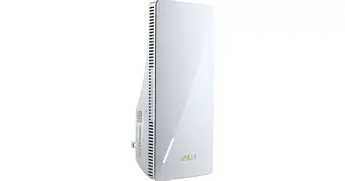
Moving away from the visual realm, we encounter the Asus Rp Ax58. This device belongs to the networking side of the laptop ecosystem. As laptops become thinner and lose their Ethernet ports, we become entirely dependent on Wi-Fi. However, even the best routers can struggle to push a signal through thick walls or across multiple floors. The Asus Rp Ax58 is a Dual-Band Wi-Fi 6 (802.11ax) Range Extender designed to eliminate "dead zones" and provide a stable, high-speed connection to your mobile devices.
The Rp Ax58 is not just a simple "repeater." It supports AiMesh technology, meaning it can integrate seamlessly with an existing Asus router to create a Mesh network. In a Mesh setup, your laptop sees only one Network Name (SSID) and automatically switches between the router and the extender as you move through your home. This is a massive advantage for laptop users who might start a video call in their home office and finish it in the kitchen; the transition is handled intelligently by the hardware to prevent dropped packets.
Performance-wise, the "Ax58" designation indicates that it adheres to the Wi-Fi 6 standard, offering speeds up to 3000 Mbps across its dual bands (2.4GHz and 5GHz). Wi-Fi 6 is specifically designed to handle environments with many connected devices. In a modern household where phones, tablets, smart lights, and laptops are all fighting for bandwidth, the Rp Ax58 uses technologies like OFDMA and MU-MIMO to organize data traffic efficiently. For a laptop user, this means lower latency during gaming and more consistent speeds during large file downloads or cloud backups.
Shop the latest Laptops & Computers picks on Amazon.
Browse Now →Pros and Cons of the Asus Rp Ax58
- Pros: Wi-Fi 6 support provides future-proofing and handles high-bandwidth tasks like 4K streaming with ease.
- Pros: AiMesh compatibility allows for a unified, seamless roaming experience without manual network switching.
- Pros: Compact, wall-plug design saves desk space and stays out of the way.
- Pros: Includes an Ethernet port, allowing you to "hardwire" a desktop or a laptop that stays in one place for maximum stability.
- Cons: Relies on the strength of the original router's signal; if placed too far away, it will simply extend a poor connection.
- Cons: Setup can be more complex than a standard extender if you are trying to configure advanced Mesh settings.
- Cons: More expensive than older Wi-Fi 5 (AC) extenders, making it an investment in the future rather than a budget fix.
Comparing Hardware: Display vs. Networking
While these products cannot be compared as "alternatives" to one another, they are often compared in the context of a total budget for a home office upgrade. A user with $400 to $500 to spend might be choosing between upgrading their visual workspace or their internet stability. The following table illustrates the vast difference in their technical goals and physical presence.
| Feature | Jgf 27 Inch 4K Monitor | Asus Rp Ax58 |
|---|---|---|
| Primary Function | Visual Output / Screen Expansion | Wireless Signal Extension / Mesh Node |
| Category | Peripheral / Display | Networking / Infrastructure |
| Core Technology | IPS Panel / 4K Resolution | Wi-Fi 6 (802.11ax) / Dual-Band |
| Data Handling | Receives Video Signal (Dashed/HDMI/USB-C) | Repeats/Amplifies Wireless Data Packets |
| Interaction | User looks at it constantly | Runs silently in the background |
| Physical Format | Large Desktop Panel with Stand | Wall-plug adapter with Antennas |
| Impact on Laptop | Increases Workspace / Multitasking | Increases Mobility / Connection Reliability |
Real-World Use Cases for Laptop Owners
To better understand why a laptop owner might choose one over the other (or both), it helps to look at specific scenarios. Laptop hardware has become powerful enough to replace desktops, but the ergonomics and infrastructure often lag behind. Here is how these two products fit into different lifestyles.
Case Study 1: The Remote Creative Professional
Imagine a graphic designer working on a 13-inch MacBook Air or a Dell XPS 13. While the laptop screen is beautiful, it is simply too small for complex Adobe Illustrator layouts. For this user, the Jgf 27 Inch 4K Monitor is a transformative purchase. It allows them to see their work at a 1:1 scale, manage toolbars on the side, and ensure color accuracy. In this scenario, the user likely stays at their desk for most of the day, so their Wi-Fi signal is likely stable. The monitor is the priority.
Buying Guide: Which One Should You Prioritize?
Deciding between these two items requires a careful audit of your current "pain points." Because they serve such different roles, the decision is usually based on what is currently hindering your productivity the most. Use the following criteria to guide your purchase.
Prioritize the Jgf 27 Inch 4K Monitor if...
You find yourself constantly Alt-Tabbing between windows because you can't see everything at once. If your neck or back hurts from hunching over a small laptop screen, the ergonomic benefit of a 27-inch monitor on a stand cannot be overstated. Furthermore, if you do any form of color-sensitive work or simply enjoy watching 4K content in your downtime, the visual upgrade is the most "noticeable" change you can make to your setup. Ensure your laptop has a port capable of outputting 4K at 60Hz (Thunderbolt 3/4, USB-C with Alt-Mode, or HDMI 2.0+).
Prioritize the Asus Rp Ax58 if...
Your internet connection is inconsistent. No matter how fast your internet package is, if the signal doesn't reach your laptop effectively, you are wasting money. If you experience "buffer face" during video calls, if your downloads frequently fail, or if you have a "dead zone" in a specific room where you like to work, the Asus Rp Ax58 is a mandatory infrastructure upgrade. This is especially true if you already own an Asus router, as the AiMesh integration provides a level of network sophistication that standard extenders cannot match.
Looking for the best Laptops & Computers deals on Amazon?
View Offers →Integration and Synergy
While we have spent much of this article explaining the differences, it is worth noting how well these two devices work together. In a "dream" laptop setup, the Asus Rp Ax58 ensures that a high-speed, low-latency data stream is hitting your laptop. Your laptop then processes that data and outputs the high-resolution results to the Jgf 27 Inch 4K Monitor. This creates a complete "Desktop Replacement" experience.
Laptop users often fall into the trap of thinking only about the computer itself—the CPU, the RAM, and the SSD. However, the interface (the monitor) and the pipeline (the Wi-Fi) are arguably just as important for the actual experience of using the machine. Investing in a Jgf 27-inch display improves how you interact with your data, while the Asus AX58 improves how your laptop accesses that data.

Technical Considerations for 4K and Wi-Fi 6
Before purchasing either, there are some technical prerequisites to keep in mind. For the 4K monitor, check your laptop’s "Integrated Graphics" or "Dedicated GPU" specs. Some older laptops can only output 4K at 30Hz, which results in a "choppy" mouse cursor movement that is very distracting. You want to ensure your hardware supports 4K at 60Hz. If you are using a very old laptop, you might even need an active adapter to convert a Mini DisplayPort to a full HDMI 2.0 signal.
For the Asus Rp Ax58, check your router's standard. While it is backward compatible with Wi-Fi 5 (802.11ac), you will only get the full speed and efficiency benefits if your main router is also a Wi-Fi 6 device. If you are still using an old ISP-provided router from five years ago, the Rp Ax58 will work, but it will be limited by the older technology of the base station. Networking is only as fast as its slowest link.
Conclusion
The Jgf 27 Inch 4K Monitor and the Asus Rp Ax58 represent two different pillars of a modern laptop-based workspace. The Jgf monitor is an investment in your eyes and your productivity, providing the clarity and space needed to perform complex tasks with ease. It turns a cramped mobile experience into a professional-grade workstation. On the other hand, the Asus Rp Ax58 is an investment in your home’s infrastructure, ensuring that the wireless freedom a laptop provides is not hampered by poor signal strength or outdated networking standards.
Choosing between them is not a matter of which is "better," but which problem you need to solve today. If your workspace feels small and your eyes feel tired, the Jgf monitor is your answer. If your connection feels slow and your video calls are dropping, the Asus Rp Ax58 is the logical choice. For the power user, these two devices are not competitors, but rather partners in creating an optimized, high-performance computing environment that allows a laptop to truly reach its full potential.