I Switched to the Piston Fit and Here is What Happened
In the rapidly evolving landscape of personal audio, the quest for the perfect balance between price and performance often leads consumers toward high-end flagship models. However, a significant shift has been occurring in the budget segment, where manufacturers are increasingly proving that high-fidelity sound does not necessarily require a triple-digit investment. One of the most prominent success stories in this category is the Piston Fit, a product that emerged from the legacy of award-winning engineering to offer an accessible entry point into quality audio. This article examines the transition from standard bundled earbuds to the specialized Piston Fit, detailing the technical nuances, ergonomic considerations, and the long-term impact on the daily listening experience.
The transition to a dedicated pair of in-ear monitors (IEMs) like the Piston Fit is often motivated by the limitations of "in-box" accessories. Most smartphones and tablets that still include headphones often provide basic plastic shells with mediocre frequency response and non-existent isolation. Stepping into the world of the Piston Fit represents a move toward intentional audio design. By focusing on airflow, material resonance, and anatomical fit, this model attempts to solve the most common grievances of the mobile listener: discomfort, lack of bass definition, and poor durability.
The Anatomy of an Audio Upgrade
To understand what happens when one switches to the Piston Fit, it is essential to analyze the physical and acoustic architecture that differentiates it from generic alternatives. The design philosophy centers on the use of aerospace-grade materials, specifically an aluminum alloy body. Unlike plastic housings, which can vibrate sympathetically with certain frequencies and cause distortion, the metal chassis of the Piston Fit provides a rigid environment for the driver. This rigidity is crucial for maintaining the clarity of the mid-range and ensuring that transients—short, high-energy sounds like drum hits—are reproduced with precision rather than blur.
Acoustically, the Piston Fit utilizes a dual-layer composite driver. This involves a sandwich-like construction where a layer of aerospace-grade metal is placed between two layers of PET (polyethylene terephthalate). This combination allows the driver to be both incredibly light and remarkably stiff. In practical terms, this means the driver can move rapidly to reproduce high frequencies (the "shimmer" in cymbals or the breathiness in a vocal) while retaining enough structural integrity to push air for deep, punchy bass. When a listener first makes the switch, the most immediate "happening" is the discovery of layers in familiar music that were previously muffled or blended together.
Ergonomics and the 45-Degree Angle
Perhaps the most significant physical change noted during a switch to the Piston Fit is the "oblique angled" nozzle design. Standard earbuds typically enter the ear canal at a straight 90-degree angle, which often conflicts with the natural curvature of the human ear canal. This conflict leads to two main issues: physical fatigue over long sessions and a poor acoustic seal. The Piston Fit addresses this by angling the nozzles at 45 degrees. This anatomical alignment allows the earbud to sit deeply and securely within the canal without applying excess pressure to the sensitive cartilage of the outer ear.
For the user, this change translates to a "low-profile" experience. Whether commuting on a crowded train, working at a desk, or even resting one's head on a pillow, the Piston Fit stays flush with the ear. The significance of the seal cannot be overstated; in-ear audio relies heavily on the "vented" or "sealed" nature of the fit to produce low-end frequencies. A weak seal results in thin, tinny sound. By optimizing the angle of entry, the Piston Fit ensures that the majority of users achieve an airtight fit immediately, which is the foundation of its warm, bass-rich sound profile.
Detailed Performance Analysis: The Listening Experience
When switching to a new audio driver, the brain undergoes a brief period of "brain burn-in," where it adapts to the new frequency response curve. With the Piston Fit, the initial impression is often one of warmth and fullness. Unlike many budget earphones that artificially boost high frequencies to create a false sense of "detail" (which often leads to ear fatigue), the Piston Fit leans into a "V-shaped" sound signature that feels natural and energetic.
Low-End Precision: The bass response is balanced rather than overwhelming. In traditional budget audio, "good bass" usually means "loud bass," which often bleeds into the vocals and makes the music sound muddy. The Piston Fit manages to keep the sub-bass and mid-bass controlled. During testing across genres like electronic dance music and hip-hop, the kick drums felt impactful, providing a visceral "thump" that standard earbuds simply cannot replicate. This is largely due to the dual-layer driver's ability to recover quickly after each stroke.
Mid-Range Clarity: This is a critical area for many listeners, as it encompasses the human voice and many acoustic instruments. Many who switch to the Piston Fit find that vocalists sound more "present." There is a distinct separation between the singer and the background instrumentation. While the mids are slightly recessed compared to the bass and treble (a hallmark of the V-shaped signature), they do not feel hollow. This makes the Piston Fit an excellent choice for podcast listeners and fans of vocal-heavy genres like folk or soul.
Discover deals on Audio & Headphones — updated daily.
Shop Amazon →High-Frequency Detail: The treble in the Piston Fit is tuned for smoothness. It avoids the sibilance (the harsh "s" and "t" sounds) that can make long listening sessions uncomfortable. While it might not satisfy "extreme" audiophiles looking for clinical levels of transparency, it offers a "forgiving" listen. This means that even lower-quality stream recordings or older tracks sound pleasant rather than revealing every flaw in the recording.
Microphone and Remote Integration
In a world of remote work and constant connectivity, the "Fit" in Piston Fit also refers to its integration into a lifestyle of communication. The cable features an in-line microphone and a single-button remote. One of the most notable outcomes of switching to this model is the improvement in call quality reported by those on the other end of the line. The MEMS (Micro-Electro-Mechanical System) microphone is positioned strategically to capture the voice while minimizing cable microphonics (the scratching sound heard when a cable rubs against clothing).
The single-button interface is designed for universal compatibility. Whether used with an older Android device, a modern laptop, or a legacy music player, the logic remains consistent: one click to play/pause or answer/end calls, two clicks to skip forward, and three clicks to go back. This simplicity is often a relief for users who find complex touch controls on wireless earbuds frustrating or prone to accidental triggers.
Pros & Cons
Every audio product involves trade-offs, especially when aiming for a specific price point. To provide a balanced view of what happens…- Pro: Exceptional Build Quality. The use of aluminum alloy instead of plastic gives the earbuds a premium feel and significantly increases their lifespan against daily wear and tear.
- Pro: Anatomical Comfort. The 45-degree oblique angle reduces ear fatigue, making them one of the few budget-friendly options comfortable enough for several hours of continuous use.
- Pro: Balanced Sound Signature. The tuning is versatile enough to handle everything from heavy metal to classical music without sounding distorted or unnatural.
- Pro: Tangle-Resistant Cable. The cable material is designed to be flexible yet sturdy, reducing the time spent untangling knots when pulling them out of a pocket or bag.
- Pro: Effective Passive Isolation. When fitted with the correct size of silicone tip, they block out a surprising amount of ambient noise, such as engine hum or office chatter.
- Con: Minimalist Accessories. The package is streamlined, focusing on the product itself; users looking for a carrying case or a wide variety of tip materials (like memory foam) will need to purchase those separately.
- Con: Fixed Cable. Unlike high-end IEMs with detachable cables, the Piston Fit cable is permanent. If the cable is damaged, the entire unit must be replaced, though the build quality makes this less likely.
- Con: No Volume Slider. The in-line remote features a single button for playback and calls, but lacks dedicated volume up/down buttons, requiring users to adjust volume on their source device.
Comparison: Piston Fit vs. Standard Alternatives
To better illustrate the technical leap taken when switching to the Piston Fit, the following table compares it to the average "Standard Bundled Earbud" typically found in consumer electronics packaging.
| Feature | Standard Bundled Earbuds | Piston Fit In-Ear Monitors |
|---|---|---|
| Housing Material | Basic Molded Plastic | Aerospace-Grade Aluminum Alloy |
| Driver Technology | Single-Layer Dynamic (General Purpose) | Dual-Layer Composite (Metal/PET) |
| Nozzle Angle | 90-Degree (Straight) | 45-Degree (Oblique Anatomical) |
| Frequency Range | Often limited (High roll-off) | 20 Hz - 20,000 Hz (Full Spectrum) |
| Cable Style | Thin TPE (Prone to tangling) | Kevlar-Reinforced / Tangle-Resistant |
| Sound Profile | Mid-Centric / Tinny | V-Shaped / Warm & Dynamic |
Buying Guide: Is the Switch Right for You?
While the Piston Fit offers a clear upgrade path, "what happens" when you switch depends largely on your current setup and listening habits. Use the following criteria to determine if this transition will meet your needs.
Identify Your Primary Use Case
If you are a frequent commuter, the Piston Fit is an excellent choice because its passive noise isolation is superior to open-style earbuds. If you are an athlete, the secure 45-degree fit will likely keep the earbuds in place better during a jog than standard straight-nozzle designs, although they are not specifically rated for heavy moisture resistance. For office workers, the in-line microphone provides a clear voice profile for video calls without the "echo" often found in budget Bluetooth headsets.
Evaluate Your Source Device
The Piston Fit utilizes a 3.5mm analog jack. This is a critical consideration in the modern era. If you have a smartphone that has removed the headphone jack, you will need a 3.5mm-to-USB-C or 3.5mm-to-Lightning adapter. The good news is that the Piston Fit has low impedance (typically 32 ohms), meaning it does not require a powerful external amplifier. It can be driven to healthy, dynamic volume levels by almost any smartphone, tablet, or laptop.
Discover deals on Audio & Headphones — updated daily.
View Offers →Consider Long-Term Comfort Needs
Many users "switch" because of physical pain. If you have smaller ears or frequently find that earbuds fall out or cause soreness after thirty minutes, the Piston Fit’s architectural focus on ergonomics is its strongest selling point. It comes with different sizes of silicone ear tips (Small, Medium, Large). It is highly recommended to spend the first ten minutes trying all three sizes; the sound quality—especially the bass response—is almost entirely dependent on achieving a tight seal.
Aesthetic Preferences
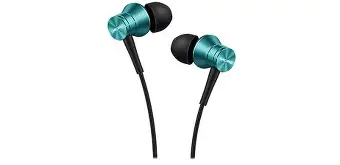
Unlike the utilitarian look of white plastic buds, the Piston Fit is available in several metallic finishes. The anodized surface is resistant to fingerprints and scratches. If you value a product that looks professional and "tech-forward" without being flashy, the matte finish of the metal housings aligns well with modern laptop and smartphone aesthetics.
What Happens Post-Switch: Long-Term Impacts
After the initial "wow" factor of hearing deeper bass and clearer vocals fades, the long-term impact of switching to the Piston Fit manifests in "audio literacy." Once you become accustomed to a driver that can differentiate between a bass guitar and a kick drum, it becomes difficult to return to lower-quality audio. This transition often serves as a "gateway" into the broader world of high-fidelity sound.
Furthermore, there is a practical "happening" regarding reliability. Standard earbuds often fail at the jack or the Y-splitter due to stress. The Piston Fit typically features reinforced strain relief at these critical points. Users find that they aren't replacing their headphones every three months, leading to a more sustainable and less frustrating ownership experience. The cable's resistance to tangling also means less mechanical stress on the internal copper wiring over time.
In terms of daily workflow, the switch often results in increased focus. Because the passive isolation is effective, listeners can maintain lower volume levels while still hearing their music clearly above environmental noise. This is better for long-term hearing health, as it eliminates the need to "crank the volume" to drown out a noisy office or bus engine. The clarity of the microphone also streamlines transitions between listening to music and taking unexpected calls, as there is no need to fumble with the phone or disconnect the headset to be heard clearly.
Conclusion
The journey of switching to the Piston Fit is essentially a story of discovering value. It is a transition from regarding headphones as a disposable accessory to viewing them as a deliberate tool for enjoyment and communication. By leveraging sophisticated materials like aeronautical-grade aluminum and a dual-layer composite diaphragm, the Piston Fit manages to deliver an acoustic performance that punches far above its weight class.
What happens when you switch is multi-layered: your music gains a newfound energy, your ears experience relief from the pressure of poorly designed nozzles, and your daily connectivity becomes more reliable through a high-quality microphone and tangle-resistant hardware. While it may not replace the $500 reference monitors used in professional studios, it provides a significantly more refined and "fun" listening experience for the everyday user. In the end, the Piston Fit proves that the most important upgrade isn't always the most expensive one; sometimes, it is simply the most thoughtful one.