Is the Even Realities G1 Still Good in 2026? Long-Term Review
I remember the mixed reactions I got when I first walked into a coffee shop wearing the Even Realities G1 back in early 2025. People couldn't quite tell if I was wearing high-end designer frames or if I was part of a secret beta test for the future. Fast forward to mid-2026, and the landscape of wearable technology has shifted dramatically. While we’ve seen dozens of new AR glasses and smart frames hit the market over the last eighteen months, I’ve kept the G1 as my primary daily driver. After over a year of constant use, I finally feel qualified to answer the question: does this hardware actually hold up, or is it just another piece of first-gen shelfware?
Before I dive into the nitty-gritty, I should clarify where these fit into my life. I didn’t buy these to replace my laptop or my phone. I bought them because I was tired of being the person who was constantly staring down at a screen while walking, in meetings, or even during dinner. I wanted a way to stay connected without disappearing from the physical world. In my experience, the G1 promised a "digital detox" through better integration, and after nearly 500 days of wear, the reality of that promise is more nuanced than I expected.
The Design: Still the Gold Standard for Stealth
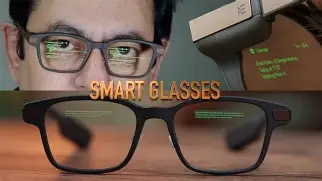
The first thing I noticed when I unboxed the G1, and the thing I still appreciate every morning when I put them on, is the build quality. Most manufacturers in 2026 are still struggling with the "bulky temple" problem. You know the look—glass frames that look normal from the front but have arms as thick as a candy bar. Even Realities managed to tuck the waveguides and the battery into a frame that is genuinely indistinguishable from standard eyewear. I opted for the grey tint, and I’ve had colleagues I’ve known for months suddenly stop and ask, "Wait, are those smart glasses?" only after they saw the tiny green glow of the display during a notification.
In terms of durability, I’ve been pleasantly surprised. I am not gentle with my gear. These have been shoved into backpack side pockets, dropped on hardwood floors, and survived a particularly nasty rainstorm in Seattle. The magnesium alloy frame has held its shape perfectly. I was worried the hinges would loosen over time—a common point of failure for smart glasses—but they still have that satisfying, firm snap. What I found was that the lens coating is also remarkably resilient. I haven't noticed any significant micro-scratches on the waveguides, which was my biggest fear given how much I wipe them down.
Living with the Display: The Monochromatic Choice
One thing that bothered me early on was the green monochrome display. In a world where we are used to OLED screens with billions of colors, looking at a single-color heads-up display (HUD) felt like a step backward. However, after testing for several months, I realized why this was the right call. The high-contrast green is visible in almost every lighting condition. Whether I’m out in the midday sun or in a dimly lit cocktail bar, the text remains crisp. If they had gone with a full-color micro-LED, the battery hit would have likely made these unwearable for a full day.
I used the G1 primarily for three things: navigation, teleprompting during presentations, and translation. The navigation is where I found the most value. Walking through a new city without having to hold my phone out like a compass is a game-changer for personal safety and immersion. The interface is minimalist; it doesn't clutter your field of vision. It’s like having a digital ghost whispering directions in the corner of your eye. I noticed that I’ve become much better at navigating my own city too, because I'm actually looking at the landmarks instead of a blue dot on a map.
The Software Evolution: From 2025 to 2026
The hardware might be from last year, but the software experience has changed significantly. When I first started using the G1, the AI integration felt like a gimmick. It was slow, and the "Look and Ask" feature often failed to identify objects correctly. After several firmware updates throughout late 2025, the latency has dropped noticeably. In my experience, the translation feature is now my favorite party trick. I spent two weeks in Tokyo last autumn, and being able to look at a menu and see the English text overlaid in my line of sight felt like living in a sci-fi movie.
Looking for the best Laptops & Computers deals on Amazon?
Browse Now →However, it hasn't all been smooth sailing. One disappointment a real owner would notice is the "Quick Note" feature. In theory, you can dictate notes on the go. In practice, if there is any significant ambient noise—like a busy street or a loud office—the microphone struggles to pick up nuances, leading to some hilarious and frustrating transcriptions. I was surprised by how much I still ended up reaching for my phone to fix a note I just took. Even in 2026, voice-to-text in a wearable form factor hasn't quite solved the background noise problem.
Battery Life and Daily Maintenance
After a year of battery cycles, I’ve seen a slight dip in longevity, but it’s not deal-breaking. When they were new, I could easily get through a 14-hour day with moderate use. Now, I find that if I’m using the translation or navigation features heavily, I’m looking for the charging case by about 7:00 PM. The case itself is sleek and provides another few charges, but I’ve had to become more mindful of my "screen time" on my face.
One thing I appreciated was the "Smart Standby" mode. If I take the glasses off and lay them on a table, they go into a deep sleep almost instantly. It sounds like a small thing, but it’s the reason these can actually function as a daily tool rather than something you have to charge every three hours like a smartwatch. I also found the charging pins on the temples have remained clean; I've used other smart glasses where sweat and skin oils gunked up the charging connection within months, but the G1 seems to have a better seal or placement.
Pros and Cons: The Honest Truth
After living with these for so long, the shine has worn off, and I can see the product for what it truly is. It is a highly specialized tool, not a general-purpose computer for your face. Here is the breakdown of what I love and what still drives me crazy.
What I Love (The Pros)
- Incredible Comfort: These are the only smart glasses I’ve ever worn that don't give me a headache after two hours. The weight distribution is perfect.
- The "Halo" Effect: The teleprompter mode is a lifesaver. Being able to see my speaking notes while maintaining eye contact with an audience has genuinely improved my professional life.
- Privacy: Unlike some other smart glasses with cameras, the G1 doesn't have a giant lens staring people in the face. It makes social interactions much less awkward.
- Quick Navigation: The haptic feedback on the temples for turn-by-turn directions is subtle and effective. I don't need to look at the screen to know when to turn.
- Build Quality: As I mentioned, these feel like a luxury product. The materials haven't faded, and the hinges haven't squeaked.
The Disappointments (The Cons)
- Microphone Weakness: In windy conditions, the voice commands are basically useless. I found myself shouting at my glasses like a crazy person more than once.
- App Ecosystem: The third-party app support is still quite thin. You are mostly tied to what Even Realities provides in their first-party suite.
- Proprietary Charging: If you lose the charging case, you are in trouble. I wish there was a secondary USB-C port hidden somewhere on the frame for emergencies.
- Fit Adjustments: Because of the tech inside the temples, you can't really "bend" these to fit your ears better. If they don't fit you perfectly out of the box, you’re stuck with it.
- Notification Overload: If you don't spend an hour fine-tuning your notification settings, your eyes will be bombarded with "likes" and "emails" all day. It takes discipline to make these useful.
The 2026 Buying Guide: Should You Still Buy the G1?
Buying tech that is a year and a half old is usually a mistake, but the Even Realities G1 is an outlier. Because they focused on a specific, minimalist use case rather than trying to be a "spatial computer," they haven't aged as poorly as some of the more ambitious AR headsets. However, there are a few things you need to consider if you are looking at picking these up today.
First, consider your prescription. One thing I found was that Getting the lenses swapped isn't as easy as going to a local optician. You really need to use their internal service to ensure the waveguide alignment isn't messed up. If your eyesight changes frequently, this might be an expensive long-term investment.
Shop the latest Laptops & Computers picks on Amazon.
View Offers →Second, think about your phone. The G1 is essentially a "dumb" terminal that relies on your smartphone's processor for everything. If you have a flagship phone from 2024 or later, the experience is snappy. If you're running an older device, you'll notice significant lag in the translation and AI features. I noticed a huge jump in performance when I upgraded my phone earlier this year; the glasses themselves didn't change, but the speed of the results did.
Third, ask yourself what you actually want smart glasses for. If you want to watch movies or play games, the G1 will disappoint you. It is a text-based, information-first device. It is for the person who wants to see their next meeting, their next turn, or a translated sentence. It is a productivity tool, not an entertainment device. In my experience, people who understand that distinction tend to love the G1, while those expecting "Iron Man" HUDs end up returning them.
Final Thoughts After 18 Months
Reaching the end of my long-term testing, I’ve realized that the Even Realities G1 succeeded where others failed precisely because it was humble. It didn't try to change how I see the world; it just tried to give me a little more information about it without getting in the way. I’ve worn these through job interviews, family holidays, and thousands of miles of travel. They have become as much a part of my daily routine as my wallet or keys.
Is it still good in 2026? Yes, absolutely. In many ways, its restraint makes it better than the over-engineered alternatives that have come since. While I’m excited to see what a "G2" might look like—hopefully with a better microphone and perhaps a slightly wider field of view—the G1 remains a benchmark for what wearable technology should be. It’s invisible when you don’t need it and indispensable when you do. If you value aesthetics and utility over flashy features, this is still the best pair of smart glasses on the market, even a year and a half later.
I’ve reached a point where I feel weird walking out the door without them. That, more than any benchmark or spec sheet, is the ultimate testament to a piece of technology. It has moved from being a "gadget" I was testing to a tool I rely on. If you can find them, and if you understand their limitations, they are still a fantastic investment for anyone looking to bridge the gap between the digital and physical worlds.